
“You” is a journey inside the perverse mind of a stalker who has a twisted vision of reality. Joe is a manipulative and delusional character. All the heinous acts he commits over the course of the five seasons are, in his perspective, completely justified, as this is his vision of love. In his mind, he is simply protecting and caring for his significant others.
Joe is represented as a layered character who evolves over time, becoming smarter and more skilled at hiding his traces. Penn Badgley’s acting perfectly illustrates this level of complexity and he is truly terrifying, capturing Joe’s sheer unpredictability.
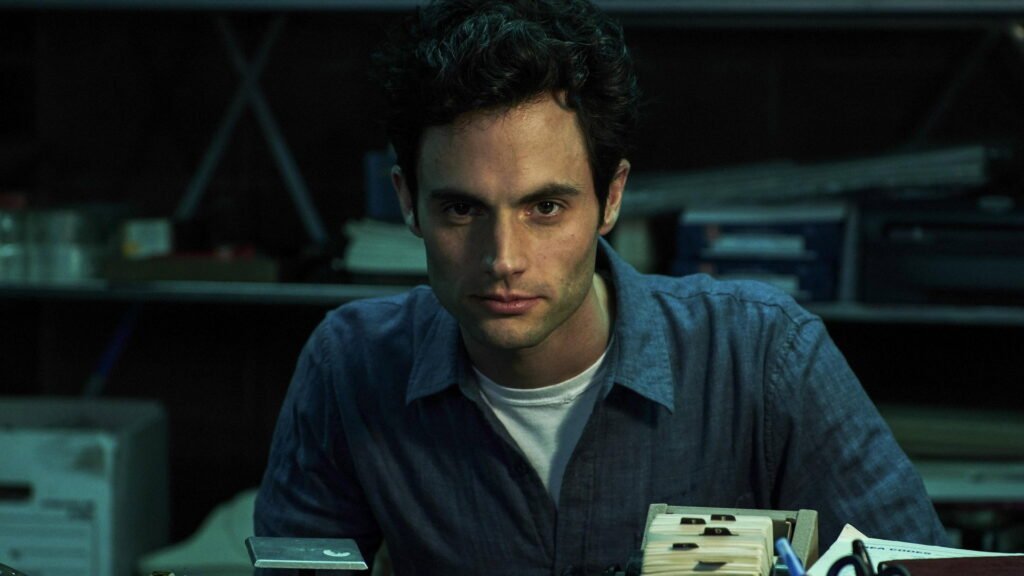
A troubled past formed an evil and deprived person
The protagonist was born in an abusive, controlling, and toxic family environment. Abandoned by his parents, he had to endure psychological and physical violence in an orphanage, and as a young adult, he was subjected to harsh punishments by his boss. Goldberg’s background contributed to shaping his evil personality.
The audience can listen to Joe’s sick thoughts the entire time. In my perspective, this is the scariest narrative device of the entire show. It allows us to understand his depraved thinking process when things do not go according to plan; letting doubts and anxiety creep into his head, providing an outlet for his frustration, ultimately leading him to torture his victims unleash his anger. It feels so grounded, providing an in-depth angle on the protagonist’s psychology and poor mental health status.
Love Quinn: facing a female mirror
The best character of the whole show is hands down Love. At first portrayed as a caring person, she soon reveals her true nature, putting in front of Joe a female version of himself and creating interesting dynamics inside this odd couple.
At first, the protagonist embraces her personality, truly believing that staying with someone matching his same darkness can finally lead to his “happily ever after.” However, her unpredictability genuinely scares and repulses Joe, as he is forced to face the exact same oppression he applies to his victims.

Beyond Love, Season 2 also delivers what I consider one of the most compelling side-stories: the investigation involving the sisters Delilah and Ellie exposing Henderson, a famous comedian using his influence to abuse unconscious women. It added a grounded, tense layer of real-world crime, backed by great performances from Jenna Ortega and Carmela Zumbado.
Despite their best efforts to live an ordinary life in Season 3, trust cannot be built between two people who are so deeply rooted in violence, constantly backstabbing each other. The already precarious marriage turns into a chess match where they try to survive their own deadly tricks. The ending of Season 3 is, in my perspective, the absolute peak of the entire show, as it displays that in certain contexts there is only room for destruction.
The consequences of a life of crime on the psyche
The show explores the profound psychological impact the crimes committed have on the protagonist. In order to avoid capture, Joe constantly has to change his identity and location. This causes a profound fracture in his psyche, to the point where his personality splits and suppresses memories. The physical manifestation of his split personality (brilliantly portrayed by Ed Speleers) gives form to the darkest corner of his mind. While the main identity twist was predictable by episode five, there was a clear inspiration from Fight Club.
With these premises, the creators built a “whodunnit” story in Season 4 that distances itself from the usual formula where Joe obsesses over a woman and entraps her in a cage, giving a bit more dynamism to the plot. However, the whole “eat-the-rich” storyline feels a bit out of place: using the double-personality trope to justify a change in his modus operandi does not hold up well. His hatred for the London elite is never explained, leaving his true motives unknown.
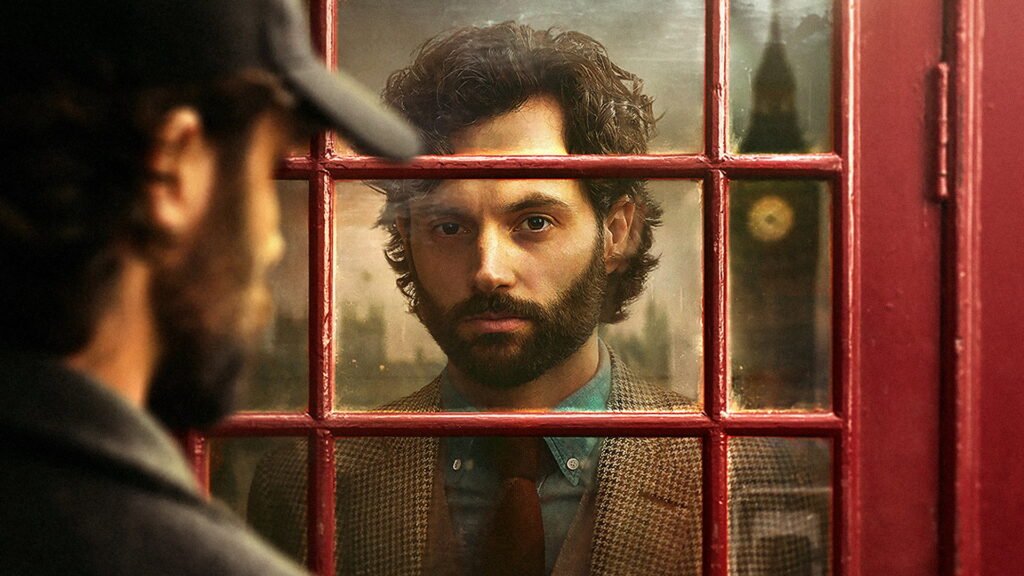
Despite these narrative flaws, this psychological struggle sets the stage for Season 5, where Joe finally stops fighting his alter ego and fully embraces his dark nature. Returning to where everything started in New York City (this time as himself) his illusion of a “happy ending” quickly shatters. He admits to himself that he truly enjoys killing, completing the cycle directly connected to his troubled past.
The excessive drama partially ruined the show
The plot armor protecting the main character is at times too evident. There are simply too many lucky coincidences that allow him to avoid or escape capture by the authorities. The protagonist is surprisingly clumsy, especially earlier in the series. At first, I thought this was due to his inexperience, only to discover that he had already killed prior to the very first episode; hence, I would expect him to be more careful. This generates a narrative that at times feels unbelievable, even for a work of fiction.
The show was also very inconsistent in terms of quality. There is a lot of teenage-level drama along the way, an element that characterized all seasons. In several instances, this was distracting and did not fit the dark vibe of the series. These elements needed to be toned down, as they represent the biggest flaw.
Overall, if you are into crime, you should give this show a chance. I understand why it had so much appeal, becoming one of the most successful and watched series on Netflix with a dedicated fanbase. I was entertained from start to finish, and it is worth going through all five seasons.